Exhibitions
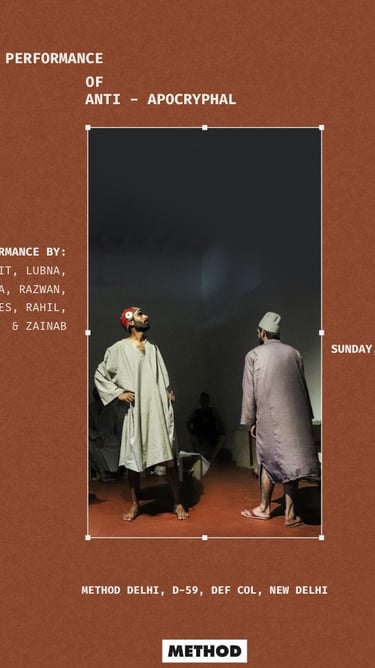
The Conference of Anti-Apocryphal
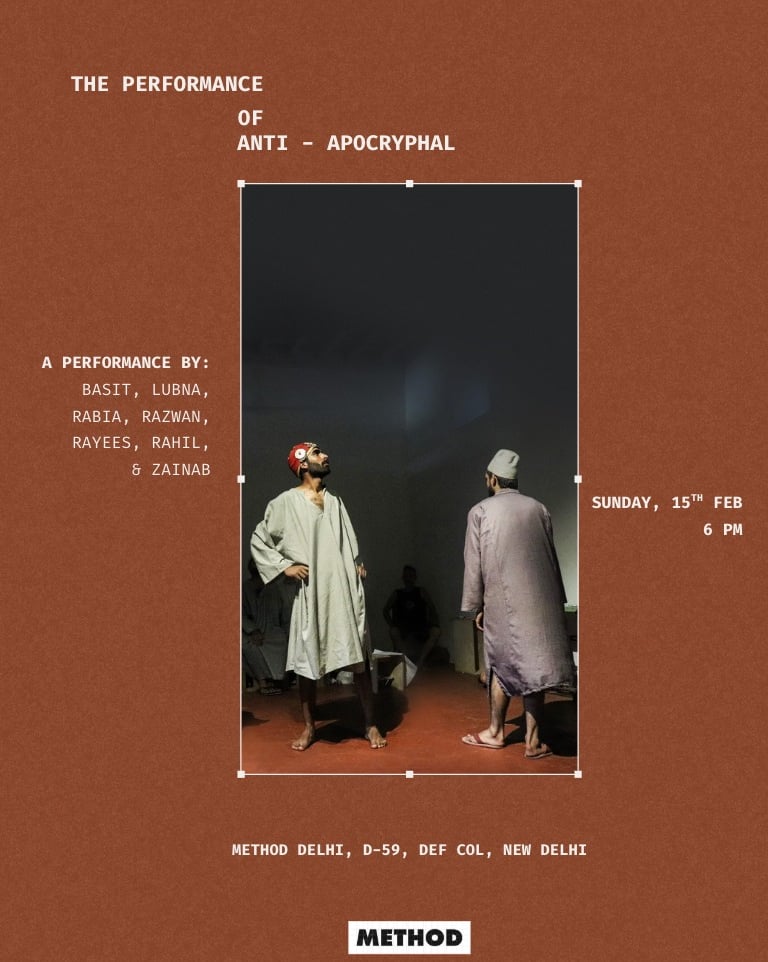
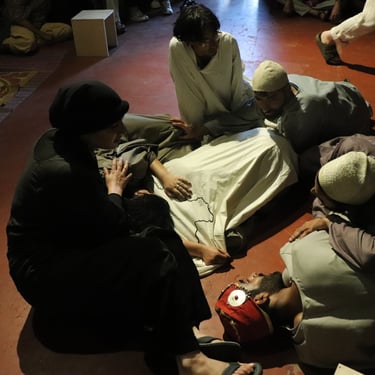
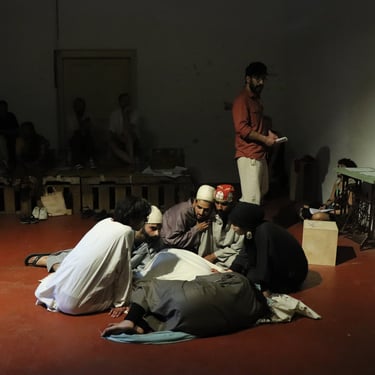
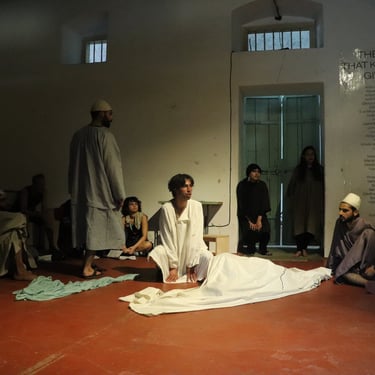
Performance
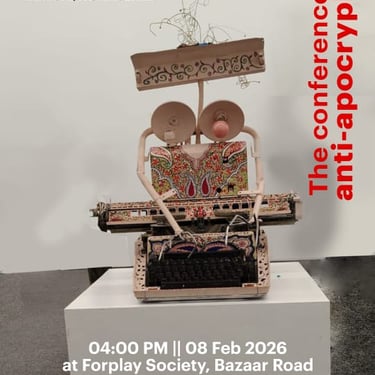
First Performance: 4 PM, 08 Feb 2026 || Forplay Society, Kochi, Kerela
Second Performance: 2 PM, 9 Feb 2026 || Parliament of Ghosts, Anand Warehouse, Kochi, Kerela
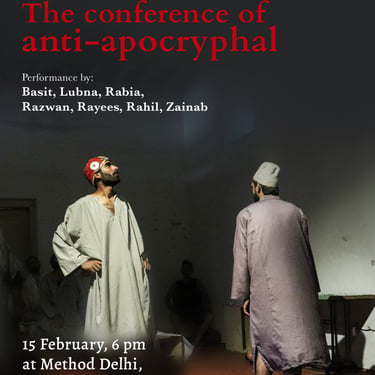
Third Performance: 6 PM, 15 Feb 2026 || Method Gallary, Defence Colony, New Delhi
Participating Artists: Rabia Mohi-ud-din, Basit Qadir, Rahil Sajad, Razwan Ahad Lone, Rayees, Salman B Baba, Lubna Bashir, Zainab Bashir Mir
Sound: Gaekhir Republik
Text: Syed Hafsa
Conceptualisation : Salman B Baba (Yusmarg Collective) & Khursheed Ahmad (Shikargah Collective)
Acknowledgements : Students Biennale, Kochi Biennale; Showkat Kathjoo; Gowhar Yakoob; Irfan, Naushad Gayoor; Inder Salim; Forplay Society, Kochi; Skye Arundhati Thomas
Special Thanks: Mario D'souza and Mashoor
Media Coverage
Gallery
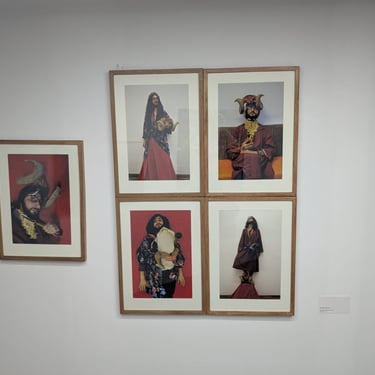
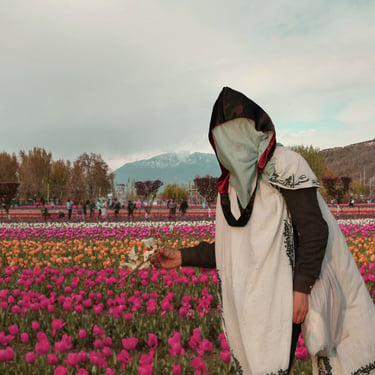
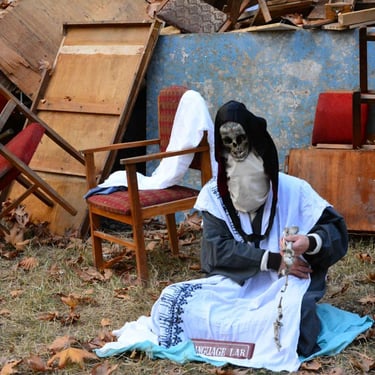
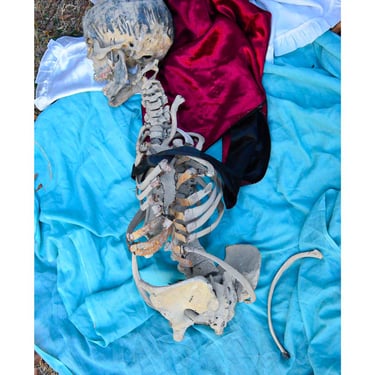
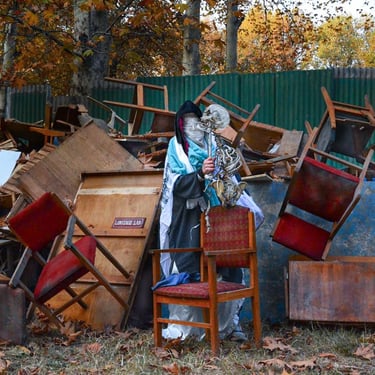
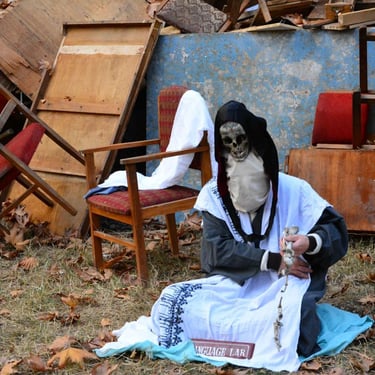
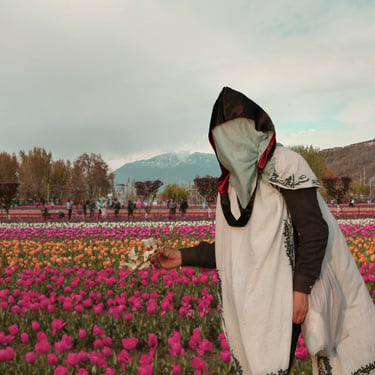
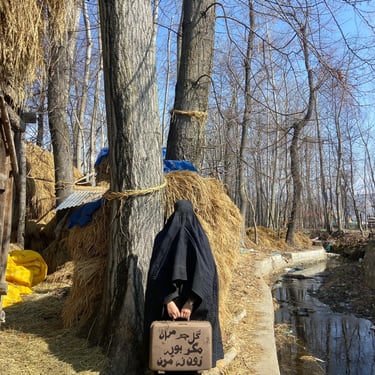
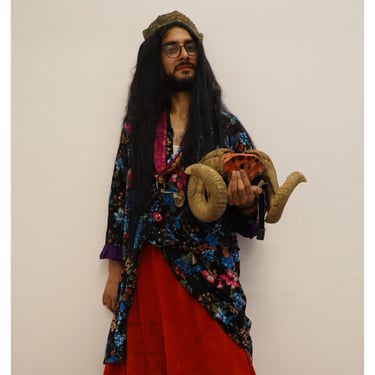
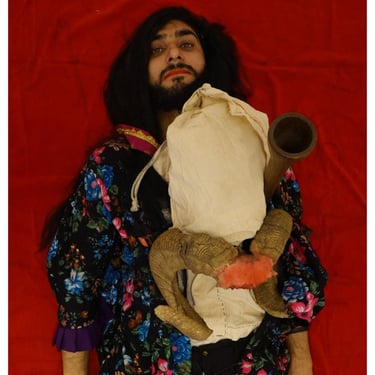
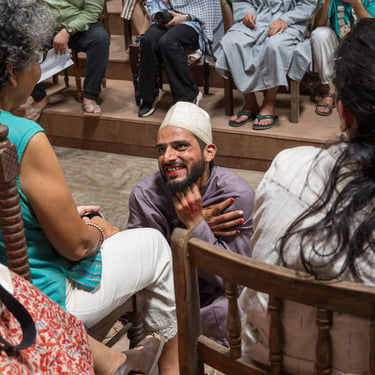
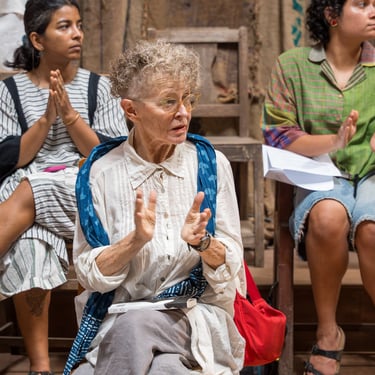
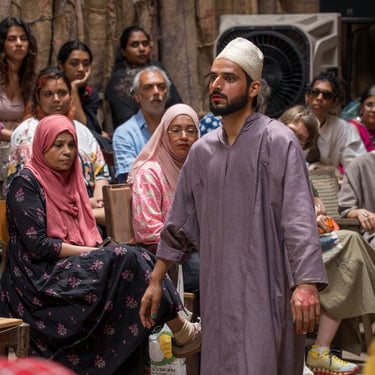
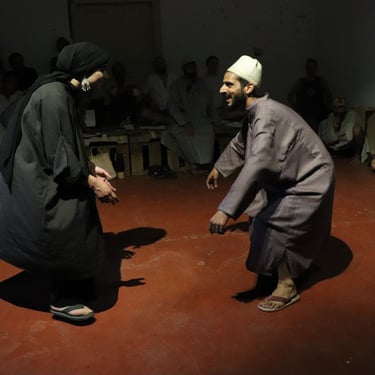
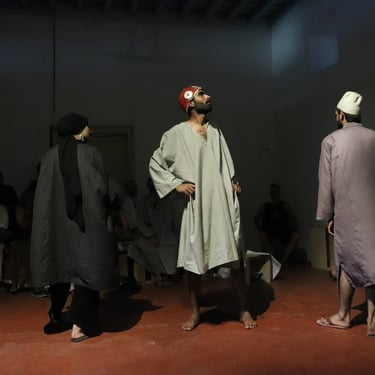
‘The Conference of Anti-Apocryphal Beings,’ a group project created by students at the University of Kashmir, gathers various figures from local mythology, such as Rantas, Dyev, Yachh, Agar Pachin, Atid, Bram Bram Chok and other half heard whispers, warnings, and doubtful tremors of mis-remembered presences. They arrive from Kashmiri folklore, mythology, rumor and contemporary anxieties that travel across mountains and checkpoints refusing every category meant to contain them. These beings inhabit the unstable borderland between memory and imagination, myth and history, fear and play; and they claim space not through verification, but through presence. Each holds a truth that cannot be archived, fear that cannot be contested, memories that cannot be contained, and experience that cannot be spoken of, to refuse erasure, apprise of collective unease and survival of a people.
Rantas eludes being merely a winter demon haunting snowbound villages; she turns into an archive of fear, gendered labour, silence, and survival, carrying generations of unrecorded women’s stories on her back. The Dyev presents a slip between a deity and demon, sacred and profane, and turns into a reminder of blur in lived cosmologies. The Braid-Chopper– a recent apparition born from panic, gossip, and fractured political reality– stands as a contemporary myth embodying how trauma mutates into creaturehood when documentation is impossible. The Yacchh with its forested presence carries ecological knowledge that has been erased or muted by modern beliefs. The Bram Bram mutters the incoherences of fractured lives in spaces where meanings are constantly re-written.
Placed together, these figures do not offer a catalogue of folklore, but step out of the periphery and into a space of deliberation. Each figure asks what truths lie veiled beneath the un-speakable stories and fears at the margins. Their presence draws attention to how precariousness is narrated, how a culture absorbs violence, how it names danger, how it encodes care, how it transforms anxiety into shared stories in the quiet nights when imagination becomes a survival instinct. This ‘conference’ is therefore not fictional; it is forensic. It is political. It continues its watching, quietly and attentively, playfully and uncannily in ways that hover just beyond doubtful and authentic, well within the pulse of collective memory.
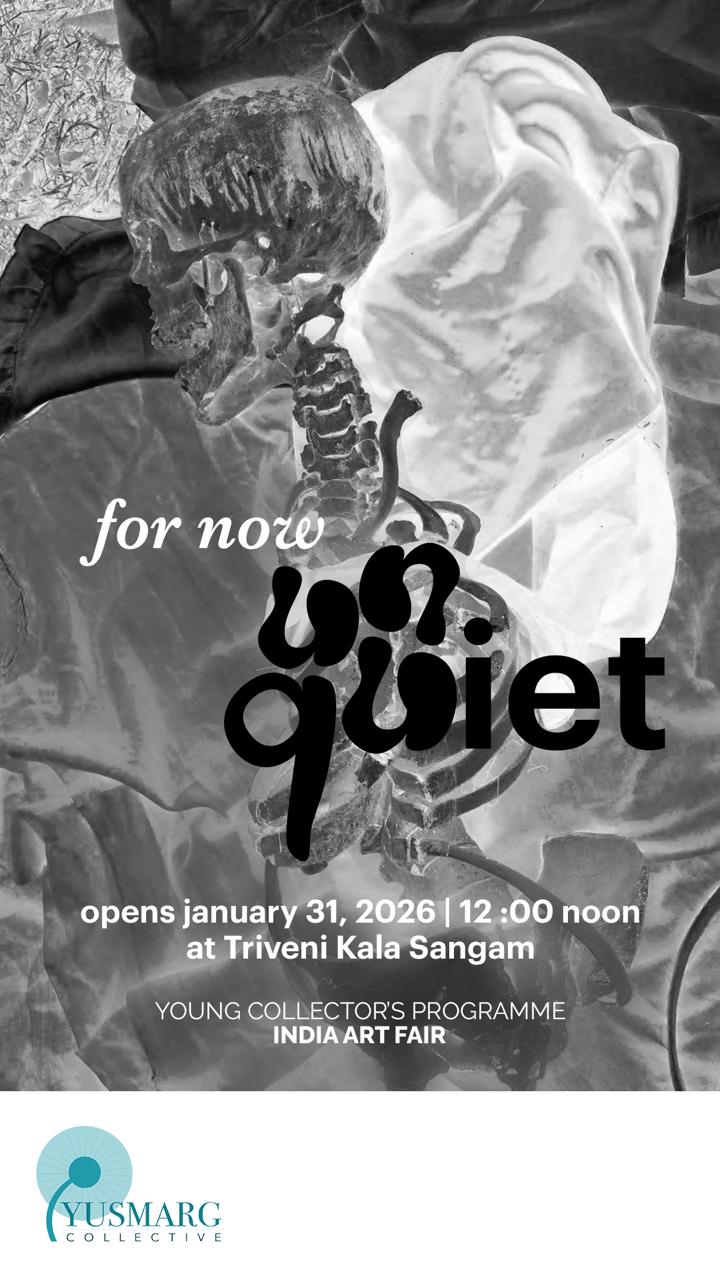
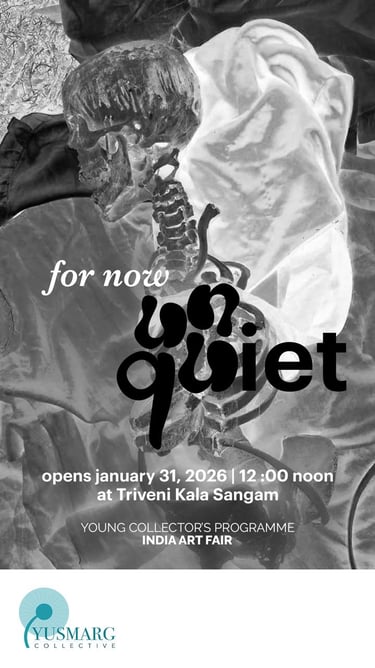
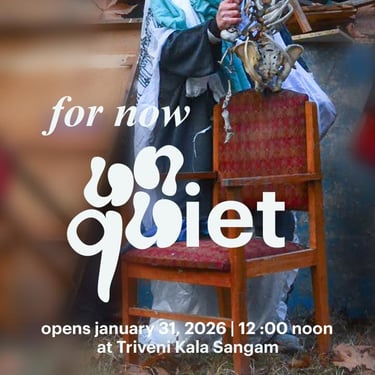
for now, unquiet
As part of Young Collectors Programme at India Art Fair 2026
Preview: 31 Jan 2026 || 06:00 PM
Exhibition: 01 Feb 2026 to 08 Feb 2026
Venue: Triveni Kala Sangam, Mandi House, Delhi
Participating Artists: Bushra Mir, Khursheed Ahmad, Lubna Bashir, Salman B. Baba & Saqib Bhat
for now, unquiet
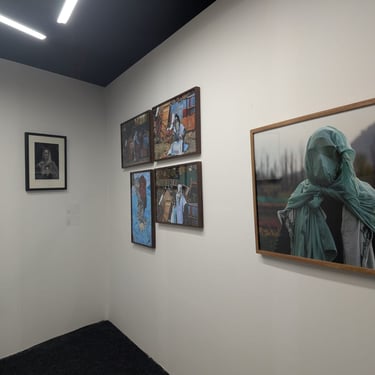
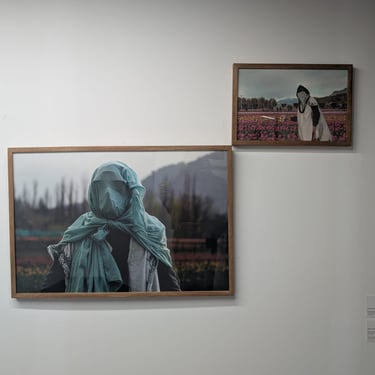
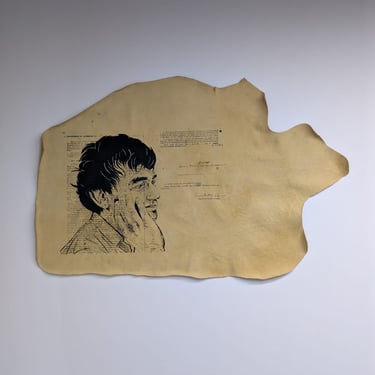
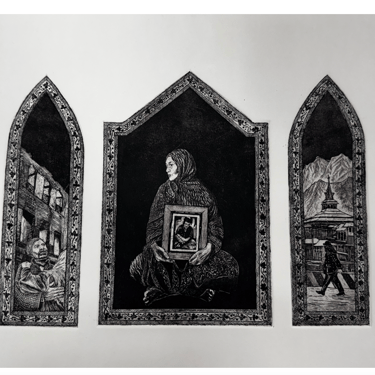
Time when looked at as a fold, beyond its linear and nonlinear understanding, recreates its sociological and political experience. It accumulates as strata where uncertianity sediment into surfaces, histories surface as a disturbance and present appears as an ongoing excavation. If time is an inevitable contingency, how can then work of art turn into a ground that inhabits these murmurs/fractures that refuse to settle in the provisional and precarious condition?
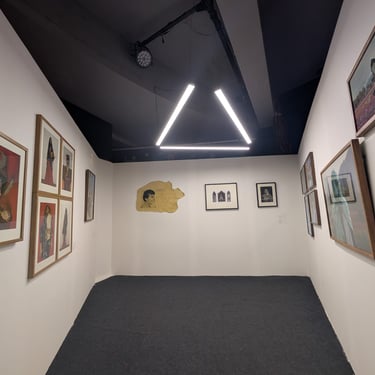
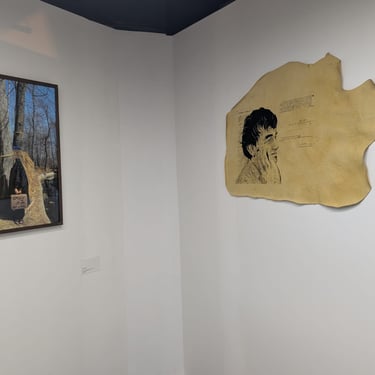
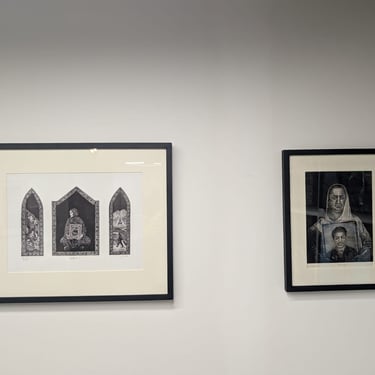
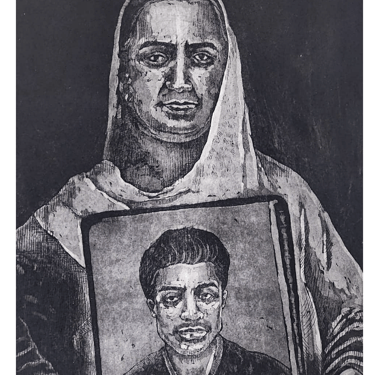
The exhibition gathers stories from Kashmir that reflect on what it means to live, see, feel and create within its spatial folds and temporal precariousness. It attends to the residues of lived experience that appear within a governed chronos, bearing witness to what remains unresolved, layered, and insistently alive. It dwells on uncontainable tremors, whispers, imprints, and afterimages. It examines time, body and land as a layered sites of inscription. It turns them into a forensic and archaeological register. Through stagings, enactments, fleeting acts, roles shaped by disappearance, mis-remembered presences, and enforced silence, these prints turn evidentiary. What is shown is a persistence of memory, of gestures, of bodies that remain, for now, unquiet.